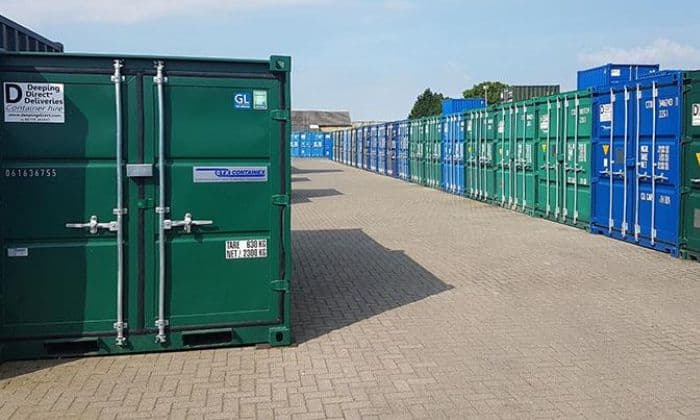
In ocean freight logistics, FCL (Full Container Load) refers to an exclusive shipment where one importer/exporter books an entire shipping container for their cargo, whereas LCL (Less than Container Load) is a consolidated shipment where multiple shippers share space within a single container, paying only for the specific volume (CBM) or weight (Revenue Tons) they utilize. Generally, FCL is faster, safer, and more economical for shipments exceeding 13–15 CBM, while LCL is the optimal choice for smaller consignments under 10 CBM.
Mục lục▼
What Is FCL Shipping? (Full Container Load)
Definition and Operating Principles
FCL (Full Container Load) means that a single shipper rents an entire 20-foot, 40-foot, or 45-foot ocean container exclusively for their own cargo. Importantly, booking an FCL does not require the container to be filled to 100% capacity; it simply grants the shipper exclusive usage and complete control over the container’s contents from origin to destination.
Key Operational Characteristics of FCL
Single Shipper, Single Consignee: The entire bill of lading (Master Bill of Lading – MBL) is issued directly for one commercial transaction.
Origin-to-Destination Sealing: The container is loaded at the supplier’s manufacturing facility or warehouse, secured with a heavy-duty numbered bolt seal (ISO/PAS 17712), transported directly to the container terminal (CY – Container Yard), and remains unopened until it reaches the final consignee.
Direct Multimodal Routing: FCL cargo bypasses intermediate sorting hubs, moving seamlessly from seaport to inland rail terminal or buyer warehouse without cargo handling along the way.
What Is LCL Shipping? (Less than Container Load / Groupage)
Definition and Groupage Mechanism
LCL (Less than Container Load), also known in global logistics as Consolidation or Groupage Freight, is an ocean shipping method designed for cargo volumes that are too small to justify the cost of renting an entire container.
Under an LCL arrangement, a freight forwarder or Non-Vessel Operating Common Carrier (NVOCC) aggregates smaller shipments from multiple independent shippers, packs them together into a single container, and ships them under one shared transport document.
Key Operational Characteristics of LCL
CFS Consolidation and Deconsolidation: Individual cargo packages are delivered to an origin Container Freight Station (CFS), consolidated into a shared container, transported across the ocean, and then unstuffed and segregated at the destination CFS before final delivery.
Pricing by Volume and Weight (W/M Rule): Shippers pay exclusively for the space occupied, calculated in Cubic Meters (CBM) or metric tons under the Revenue Ton (RT) pricing model.
House Bill of Lading (HBL): Each individual cargo owner receives an individual House Bill of Lading issued by the freight consolidator, while the carrier issues a Master Bill of Lading to the consolidator.
FCL vs. LCL: Comprehensive Side-by-Side Comparison
Key Comparison Metric
FCL (Full Container Load)
LCL (Less than Container Load)
Cargo Volume Threshold
Best for volumes > 13–15 CBM (or high-value cargo)
Best for small volumes between 1–10 CBM
Pricing Structure
Flat rate per container (fixed ocean freight)
Variable rate per CBM or Revenue Ton (RT)
Transit Time
Faster: Direct port-to-port and CY-to-CY transit
Slower (+3 to 7 days): Requires CFS consolidation & deconsolidation
Cargo Security & Risk
Minimal: Sealed at origin; handled only at loading/unloading
Higher: Multiple physical handlings, sorting, and co-loading risk
Customs Inspection
Isolated to your own shipment; clear accountability
Shared Risk: If one co-loaded shipment is held, entire container delayed
Booking Flexibility
High capacity availability on major ocean lanes
Highly flexible for small, frequent inventory replenishments
Bill of Lading Type
Direct Master Bill of Lading (MBL) or House B/L
House Bill of Lading (HBL) issued by NVOCC/forwarder
Handover Point
Container Yard (CY) / Factory Door
Container Freight Station (CFS)
The Financial Break-Even Point: When Does FCL Become Cheaper Than LCL?
One of the most critical calculations in international supply chain management is determining the precise tipping point where booking a dedicated 20ft container costs less than shipping via LCL consolidation.
The “Rule of Thumb” Break-Even Range (10 to 13 CBM)
Under 10 CBM: LCL is almost universally more cost-effective. The total freight and local handling charges will be significantly lower than renting a full 20ft container.
10 CBM to 13 CBM (The “Grey Zone”): The cost difference between LCL and FCL narrows dramatically. At this stage, total landed costs must be compared by evaluating origin and destination local terminal charges.
Over 13 to 15 CBM: FCL becomes financially superior. Even though a 20ft container offers ~28–33 CBM of internal volume, paying a flat FCL rate is generally cheaper than paying cumulative per-CBM ocean freight and heavy destination CFS handling fees.
Understanding Hidden Costs: Why Ocean Freight Alone Is Deceptive
Shippers frequently make the mistake of comparing only the base ocean freight (O/F) rate. In LCL shipping, freight forwarders often quote an extremely low base freight (sometimes even $0 or negative freight from certain Asian ports), but compensate by charging exorbitant Destination CFS Charges, Deconsolidation Fees, and China Import Service Fees (CISF) upon arrival.
In contrast, FCL charges follow transparent, predictable standard terminal tariffs (Terminal Handling Charges – THC, Documentation, and Seal fees).
Standard Ocean Shipping Container Specifications
To choose the optimal ocean freight mode, supply chain planners must understand standard container dimensions and usable volumetric capacities:
Understanding how cargo physically travels through maritime infrastructure illuminates the operational differences between both methods:
The FCL Operational Journey
Container Release & Trucking: An empty container is pulled from the shipping line depot and trucked to the shipper’s factory.
Factory Stuffing & Sealing: The exporter packs the container and fastens the high-security bolt seal.
CY Gate-In: The sealed container is delivered directly to the seaport Container Yard (CY).
Vessel Loading & Ocean Transit: The container is loaded onto the container vessel.
Port Discharge & Delivery: Upon arrival at the destination port and customs clearance, the intact container is trucked directly to the buyer’s warehouse for destuffing.
The LCL Operational Journey
Cargo Pickup & CFS Delivery: Loose cartons or pallets are trucked from the supplier to the local origin CFS warehouse.
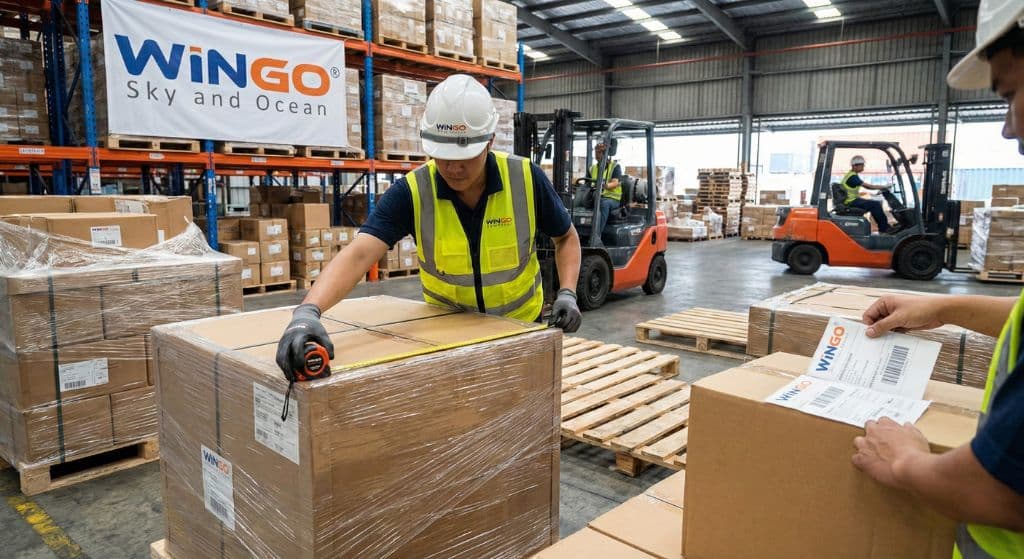
Cargo Verification & Staging: The CFS team measures dimensions (CBM), weighs packages, and inspects labeling.
Container Consolidation (Stuffing): Multiple shipments destined for the same destination port are packed into one shared container.
CY Delivery & Sea Voyage: The consolidated container moves to the port and departs on the container ship.
Destination CFS Deconsolidation: Upon discharge, the container is moved to an off-dock or on-dock CFS, destuffed, and sorted by individual House B/L.
Final Cargo Handover: Individual consignees or their customs brokers present delivery orders (D/O) and pick up their loose cargo at the CFS.
Decision Framework: When to Choose FCL vs. LCL
Choose FCL If:
Your total shipment volume exceeds 13–15 CBM.
Your cargo consists of fragile, delicate, or high-value items (luxury goods, precision electronics, glass) that cannot tolerate multiple handling cycles.
Your cargo is classified as Dangerous Goods (DG) or hazardous chemicals requiring dedicated containment and specific segregation.
You have strict delivery deadlines, as FCL eliminates 3–7 days of consolidation and destuffing delays.
You require maximum customs security and wish to avoid the risk of customs holds caused by co-loaded third-party freight.
Choose LCL If:
Your total cargo volume is small, typically between 1 and 10 CBM.
You operate a Just-in-Time (JIT) or agile inventory replenishment model (e.g., restocking Amazon FBA or e-commerce fulfillment centers frequently).
You are shipping product samples, test batches, or trial market orders.
You lack warehouse space to receive or store an entire 20ft container at one time.
You want to avoid container demurrage and detention risks at the destination port.
Frequently Asked Questions (FAQ) About FCL and LCL
Can I book an FCL container even if my cargo only fills half the space?
Yes. Booking an FCL grants you exclusive ownership of the container for that voyage regardless of how much space you use. If your cargo is fragile, urgent, or high-value, booking an FCL for 15 CBM in a 33 CBM container is often smarter and safer than shipping via LCL.
How is LCL freight calculated under the W/M (Weight or Measurement) rule?
LCL freight is billed based on Revenue Tons (RT) using the standard ocean maritime ratio of 1 CBM = 1,000 kg (1 Metric Ton). The forwarder calculates both total volume in CBM and total gross weight in metric tons, and bills whichever number is greater. For example, a 3 CBM shipment weighing 4,000 kg (4 MT) will be billed at 4 Revenue Tons.
Why is LCL shipping transit time longer than FCL?
LCL transit is inherently 3 to 7 days longer due to origin consolidation cut-off deadlines (cargo must arrive at the CFS 3–5 days prior to vessel departure) and destination deconsolidation requirements (destuffing, sorting, customs clearance, and issuance of Delivery Orders at the destination CFS).
What happens if another company’s cargo in my LCL container fails customs inspection?
If one co-loaded shipment within an LCL container is flagged for contraband, misdeclared HS codes, or physical inspection (Red Channel), customs authorities will place a hold on the entire container. This delays all co-loaded shipments until the issue is investigated and resolved.
What are the standard Incoterms used for FCL and LCL?
Both FCL and LCL can operate under standard ICC Incoterms (such as FOB, CIF, CFR, EXW, DDP, DAP, and FCA). For LCL, FCA (Container Freight Station) and CPT/CIP are strongly recommended by the ICC over traditional maritime terms like FOB or CIF.
Conclusion: Optimize Your Maritime Supply Chain Today
Choosing between FCL and LCL is not merely a question of shipment size—it is a strategic trade-off between freight cost, transit velocity, cargo security, and inventory agility. By accurately calculating your volumetric break-even points and auditing total landed destination costs, you can maximize profitability across every ocean trade lane.
Need competitive FCL container rates or seamless LCL consolidation services from Vietnam to global markets? ContactPersonat WinGo Logistics today for instant ocean freight quotes and dedicated supply chain support.
Was this article helpful to you?
0.0 / 5 (0 lượt đánh giá)
8/27/2026
Incoterms 2020 Explained: The Complete Guide to the 11 ICC Rules, Key Changes, and Global Shipping Compliance