How to Ship Vietnamese Handicrafts to the USA: The Complete Export, Customs, and Packaging Guide
Published: 8/27/2026Logistics News & Industry Insights· 8 min read
Table of Contents
- 1.Why Vietnamese Handicrafts Are Booming in the US Market
- 2.Top Categories of Vietnamese Handicrafts Exported to the US
- 3.Step-by-Step Export Procedures for Shipping Handicrafts from Vietnam to the US
- Step 1: Product Classification and Material Verification
- Step 2: Preparing the Mandatory Export Dossier
- Step 3: Origin Certification (Certificate of Origin – C/O)
- Step 4: Specialized Quarantine, Fumigation, and US Compliance Filings
- Step 5: Export Entity Standing (Direct Export vs. Entrusted Export)
- Step 6: US Customs Clearance and Final Door Delivery
- 4.Export-Grade Packaging Guidelines for Fragile and Organic Crafts
- 1. Ceramic, Glass, and Lacquerware Protection
- 2. Moisture and Mold Prevention for Bamboo, Rattan, and Wood
- 5.Choosing the Best Freight Mode: Air Freight vs. Ocean Freight
- 6.Frequently Asked Questions (FAQ) About Shipping Handicrafts to the US
- Do I need an FDA certificate to ship handmade ceramic pottery to the US?
- What happens if wooden handicrafts arrive in the US without an ISPM 15 stamp?
- What is the US Lacey Act, and does it apply to handcrafted wooden furniture?
- How are customs duties calculated for Vietnamese handicrafts entering the US?
- Can individual sellers ship handmade products directly to US Amazon FBA warehouses?
- 7.Conclusion: Partner with WinGo Logistics for Hassle-Free US Export
To ship Vietnamese handicrafts to the United States, exporters must complete standard Vietnam export customs declarations (VNACCS/VCIS), secure a Certificate of Origin (C/O), obtain an ISPM 15 Fumigation Certificate for raw timber/packing wood, and acquire a Phytosanitary Certificate for plant materials (bamboo, rattan). When entering the US, goods must comply with US Customs and Border Protection (CBP) regulations, USDA APHIS standards, and the Lacey Act Declaration for wooden crafts to ensure smooth clearance without port delays.
Why Vietnamese Handicrafts Are Booming in the US Market
Vietnam is globally renowned for its centuries-old artisanal villages and rich heritage of handcrafted artistry. In the United States, demand for authentic, eco-friendly, and sustainable home decor has driven exponential growth for Vietnamese artisanal exports.
Top Categories of Vietnamese Handicrafts Exported to the US
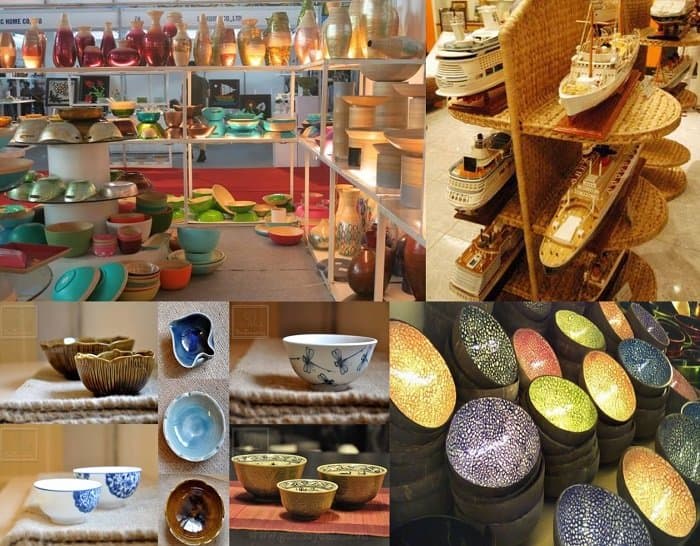
- Ceramics and Pottery (Đồ Gốm Sứ): World-famous artisanal pottery from historic craft hubs like Bat Trang (Hanoi), Dong Trieu (Quang Ninh), and Binh Duong, ranging from decorative porcelain vases, garden planters, and tea sets to intricate ceramic statues.
- Rattan, Bamboo, and Wickerwork (Hàng Mây Tre Đan): Lightweight, sustainable home decor including woven storage baskets, rattan light fixtures, wicker chairs, dining placemats, and woven handbags.
- Traditional Lacquerware (Sơn Mài): High-end artistic wall panels, decorative jewelry boxes, polished serving trays, and lacquer bowls created through laborious multi-layer natural resin techniques.
- Handcrafted Wooden Furniture and Sculptures (Đồ Gỗ Mỹ Nghệ): Intricately carved teak, mahogany, and acacia wood furniture, ornamental altars, spiritual figurines, and bespoke architectural carvings.
- Artisanal Hand-Embroidered Textiles (Hàng Thêu Tay): Silk wall tapestries, hand-stitched linen table runners, embroidered kimonos, and traditional Vietnamese Ao Dai garments.
- Jewelry and Handcrafted Metalware (Đồ Kim Hoàn & Đồ Đồng): Hand-forged bronze statues, copper bells, and filigree silver jewelry.
Step-by-Step Export Procedures for Shipping Handicrafts from Vietnam to the US
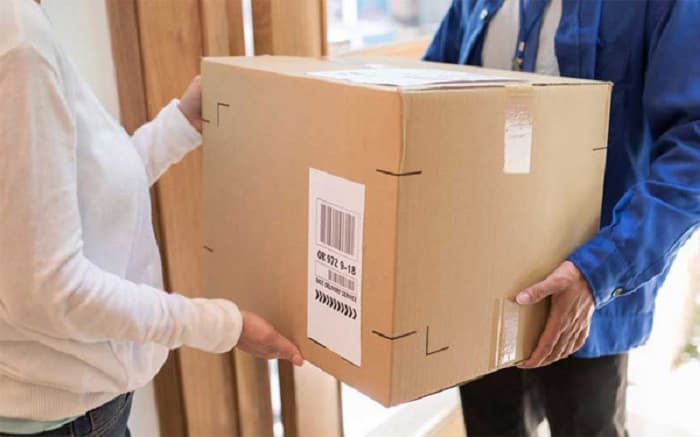
Navigating the legal and operational pipeline requires a structured approach across six essential phases:
Step 1: Product Classification and Material Verification
Before contracting freight, exporters must verify that the product’s raw materials comply with international wildlife and forest protection treaties:
- Ensure no endangered timber species (under CITES Appendix I, II, or III) or banned animal parts (such as ivory, turtle shells, or protected feathers) are utilized.
- Classify the correct 6-to-10-digit Harmonized System (HS) Code for each product type (e.g., Chapter 44 for wood, Chapter 46 for basketware/rattan, Chapter 69 for ceramic goods).
Step 2: Preparing the Mandatory Export Dossier
The standard commercial export dossier submitted through Vietnam’s electronic customs system (VNACCS/VCIS) includes:
- Commercial Invoice & Packing List: Detailed breakdown of item quantities, net/gross weights, dimensions, and unit values in USD.
- Sales Contract / Purchase Order: Outlining Incoterms (e.g., FOB Ho Chi Minh, CIF Los Angeles, DDP New York).
- Bill of Lading (B/L) or Air Waybill (AWB): Issued by the ocean carrier or airline forwarder.
Step 3: Origin Certification (Certificate of Origin – C/O)
While shipments to the US do not fall under a bilateral Free Trade Agreement (FTA) with preferential tariffs, a Certificate of Origin (C/O Form B or Non-Preferential C/O) issued by the Vietnam Chamber of Commerce and Industry (VCCI) or the Ministry of Industry and Trade is vital to authenticate non-dumping origin and prevent customs inquiries.
Step 4: Specialized Quarantine, Fumigation, and US Compliance Filings
Handicraft items derived from organic or agricultural materials require mandatory treatment and compliance filings:
- ISPM 15 Fumigation Certificate (Chứng thư hun trùng): Required for all raw wood handicrafts, solid timber packaging, and wooden pallets to eliminate invasive wood-boring pests. Treatments must use Methyl Bromide (MB) or Heat Treatment (HT) with official IPPC stamps.
- Phytosanitary Certificate (Giấy kiểm dịch thực vật): Issued by Vietnam Plant Protection Department for dried bamboo, rattan, seagrass, and untreated agricultural plant fibers.
- US Lacey Act Declaration: Mandated by the US Department of Agriculture Animal and Plant Health Inspection Service (USDA APHIS) for all imported wood and plant products, declaring the scientific botanical name (genus and species), country of harvest, and quantity.
- US FDA Compliance for Food-Contact Ceramics: If ceramic bowls, mugs, or plates are intended for dining or beverage use, they must comply with US Food and Drug Administration (FDA) guidelines regarding lead and cadmium leaching thresholds.
Step 5: Export Entity Standing (Direct Export vs. Entrusted Export)
- Registered Businesses: Companies possessing an active Vietnamese business registration certificate and tax code can declare directly on the VNACCS system.
- Individual Artisans & Overseas Vietnamese: Individuals shipping family heirlooms, bespoke gifts, or trial craft batches without an export license can utilize Entrusted Export Services (Dịch vụ ủy thác xuất khẩu) through an authorized freight forwarder.
Step 6: US Customs Clearance and Final Door Delivery
Upon arrival at US seaports (e.g., Long Beach, Los Angeles, Seattle, New York) or airport hubs (e.g., LAX, JFK, ORD), the US Customs Broker files the Entry Summary (CBP Form 7501), clears customs duties and Merchandise Processing Fees (MPF), coordinates terminal handling, and arranges final trucking delivery to commercial fulfillment centers (e.g., Amazon FBA) or residential addresses.
Export-Grade Packaging Guidelines for Fragile and Organic Crafts
Improper packaging is the primary cause of cargo damage, mold infestation, and insurance claim denials during trans-Pacific transit. Follow these strict packaging rules:
1. Ceramic, Glass, and Lacquerware Protection
- Individual Wrapping: Wrap each item in multi-layered high-density bubble wrap (minimum 3–5 layers) and secure with heavy-duty tape.
- Partitioned Inner Boxes: Place wrapped items into 5-ply or 7-ply corrugated cardboard boxes separated by custom-molded polystyrene foam inserts or honeycomb cardboard dividers.
- Wooden Crating: For delicate ceramic sculptures, oversized porcelain vases, or lacquer paintings, construct rigid exterior wooden crates with corner reinforcements and clear “FRAGILE” (Hàng dễ vỡ) and “THIS SIDE UP” international handling labels.
2. Moisture and Mold Prevention for Bamboo, Rattan, and Wood
- Moisture Content Control: Ensure raw wood and rattan moisture content is strictly below 12–14% prior to packing to prevent warping and mold during ocean container voyages (which experience severe humidity shifts across equatorial waters).
- Desiccant Packs (Gói hút ẩm): Insert industrial-grade silica gel or calcium chloride desiccant bags inside every master carton and hang container dry poles inside ocean containers.
- Vented Poly-Bags: Avoid hermetically sealing untreated wood products in airtight plastic wrap, which traps condensation and triggers fungal growth.
Choosing the Best Freight Mode: Air Freight vs. Ocean Freight
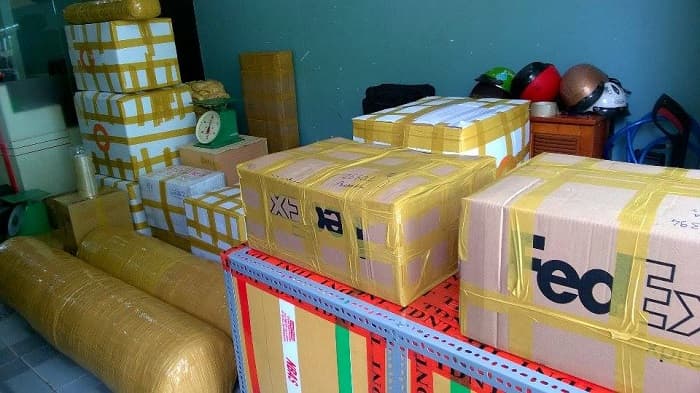
Selecting the optimal transport method depends on shipment volume, urgency, budget, and product fragility:
| Parameter | Air Express / Air Cargo | Ocean Freight (LCL) | Ocean Freight (FCL) |
|---|---|---|---|
| Transit Time | 3 – 7 business days | 20 – 35 days | 18 – 30 days |
| Best Suited For | Small artisanal parcels (<100 kg), sample orders, high-value jewelry | Medium shipments (1 – 15 CBM), consolidated wholesale orders | Large commercial volume (20ft / 40ft / 40HC containers) |
| Cost Profile | Higher cost per kg; calculated based on Actual vs. Volumetric Weight | Highly economical per CBM; shared container costs | Lowest freight cost per unit volume |
| Risk of Damage | Minimal handling points; smooth airport-to-airport transit | Multiple transshipment handling points at CFS warehouses | Cargo remains sealed in shipper’s container factory to destination |
Frequently Asked Questions (FAQ) About Shipping Handicrafts to the US
Do I need an FDA certificate to ship handmade ceramic pottery to the US?
If the ceramic items are strictly ornamental (e.g., decorative vases, wall tiles, art sculptures), FDA registration is not required. However, if the pottery is designed for food or beverage contact (e.g., soup bowls, coffee mugs, teapots, dinner plates), it must comply with US FDA food-contact safety standards regarding lead and cadmium limits, and an FDA prior notice / declaration must be submitted.
What happens if wooden handicrafts arrive in the US without an ISPM 15 stamp?
Shipments containing non-compliant, untreated raw wood packaging or solid wood products lacking certified ISPM 15 heat-treatment marks will be immediately flagged by US Customs and Border Protection (CBP) and USDA inspectors. The cargo may be ordered for immediate quarantine re-export, destruction at the shipper’s expense, or costly terminal fumigation.
What is the US Lacey Act, and does it apply to handcrafted wooden furniture?
Yes. The Lacey Act makes it unlawful to import into the US any plant or wood product harvested in violation of foreign or domestic laws. Importers must file a Lacey Act Declaration detailing the scientific botanical genus, species, harvest country, and commercial value of all timber elements.
How are customs duties calculated for Vietnamese handicrafts entering the US?
US import duties are determined by the specific Harmonized Tariff Schedule (HTS) code assigned to the merchandise. While many traditional hand-woven baskets and textile crafts enjoy low duty rates (0% to 5%), certain ceramic goods and specialty wooden furniture can carry duties ranging from 3% to 15%, plus standard Merchandise Processing Fees (MPF).
Can individual sellers ship handmade products directly to US Amazon FBA warehouses?
Yes. Exporters can utilize Delivered Duty Paid (DDP) multimodal freight services. Under DDP terms, the freight forwarder manages ocean/air transport, pays all US customs duties and taxes upfront, coordinates pallet labeling according to Amazon FBA requirements, and delivers directly to Amazon fulfillment centers across the US.
Conclusion: Partner with WinGo Logistics for Hassle-Free US Export
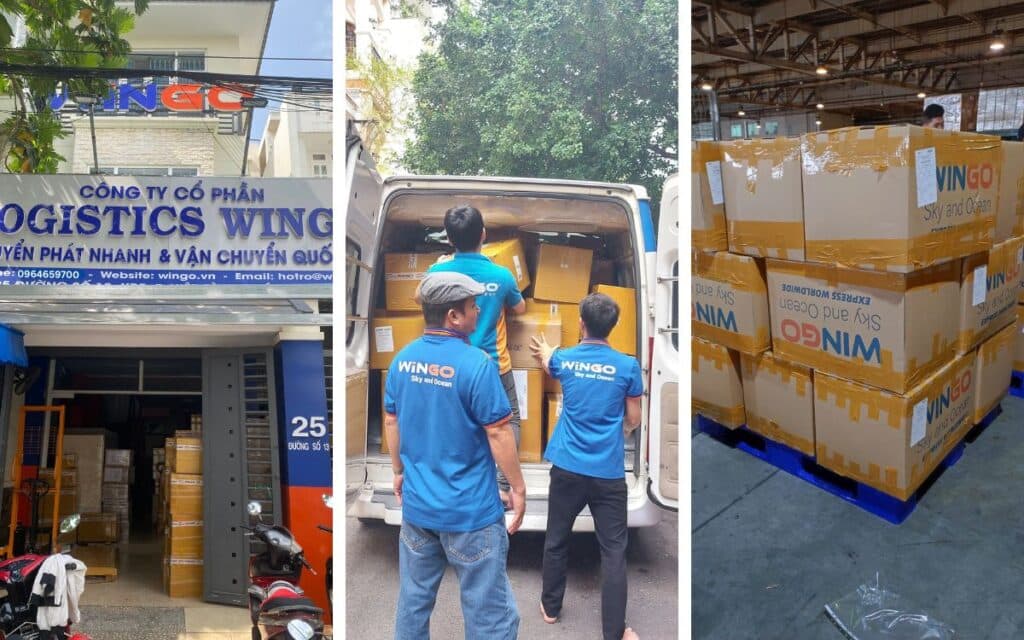
Exporting Vietnamese handicrafts to the competitive US marketplace offers tremendous revenue potential, but success hinges on meticulous customs compliance, proper agricultural quarantine treatments, and robust export-grade packaging.
Was this article helpful to you?
0.0 / 5 (0 lượt đánh giá)