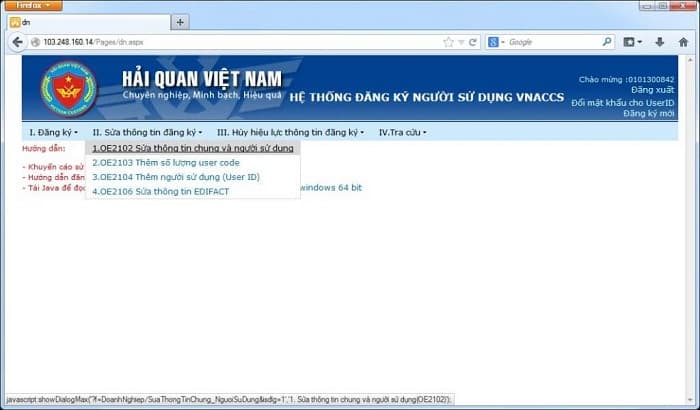
An Electronic Customs Declaration (e-Customs / e-Declaration) is the legally mandated digital process of declaring import and export cargo information to customs authorities via specialized internet-connected software. In Vietnam, this process is automated through the VNACCS/VCIS system, allowing businesses to submit declarations 24/7, receive instant automated risk classification (Green, Yellow, or Red channel), pay duties electronically, and obtain rapid cargo clearance without physical paperwork.
Mục lục▼
Understanding Electronic Customs Declaration: Definition and Core Architecture
What Is Electronic Customs Declaration?
Electronic customs declaration refers to the digital submission of import and export cargo dossiers to government customs agencies through authorized electronic data interchange (EDI) software. Instead of manually filling out paper declaration forms and queuing at customs headquarters, businesses transmit encrypted digital declarations directly over the internet.
Upon receiving the electronic transmission, the customs automated processing system validates the data, registers a unique declaration number, assesses compliance risk profiles, and returns an official customs channel classification result (phân luồng hải quan) directly back to the enterprise’s software interface.
The Technological Backbone: Vietnam’s VNACCS/VCIS System
Vietnam modernized its customs administration by deploying the VNACCS/VCIS (Vietnam Automated Cargo and Port Consolidated Clearance System / Vietnam Customs Intelligence Information System), developed in collaboration with Japan’s NACCS Center. VNACCS/VCIS integrates multiple sub-systems into a unified digital ecosystem:
e-Declaration: Core module for lodging export and import customs declarations.
e-Manifest: Digital cargo manifest declaration system for maritime and aviation carriers.
e-Invoice: Electronic commercial invoice filing directly synchronized with national tax databases.
e-C/O: Electronic Certificate of Origin verification under bilateral and multilateral Free Trade Agreements (FTAs).
e-Payment: Real-time electronic customs duty payment gateway connecting customs with commercial banks and the State Treasury.
Authorized e-Customs Software in Vietnam
Enterprises operating in Vietnam execute electronic declarations using government-certified third-party software, most notably:
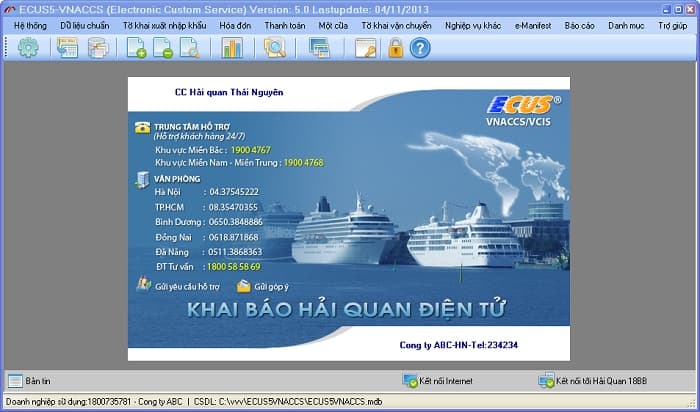
ECUS5-VNACCS (Thai Son Software): The most widely utilized commercial customs software in Vietnam, featuring extensive integration with warehouse management and accounting systems.
FPT.VNACCS (FPT Information System): A robust enterprise-grade solution widely adopted by multinational corporations and large-scale manufacturing plants.
The 4-Step Workflow of Electronic Customs Clearance in Vietnam
Executing an electronic customs declaration follows a strictly regulated, logical sequence from initial data compilation to final cargo release:
Step 1: Preparation, Documentation, and Digital Signature Setup
Before lodging a declaration, the declaring enterprise must acquire a registered Digital Signature (Chữ ký số / USB Token) certified by the General Department of Vietnam Customs. The business compiles the complete commercial dossier, including:
Commercial Invoice & Packing List
Bill of Lading (B/L) or Air Waybill (AWB)
Certificate of Origin (C/O)
Import/Export licenses or specialized inspection permits (if applicable)
Step 2: Data Input and Electronic Transmission (EDA/EDB and EDC/EDD)
The customs broker or in-house logistics officer enters cargo data into the software (HS codes, product descriptions, origin, commercial terms, valuation, tax rates). The process involves two stages:
Draft Transmission (Khai trước thông tin hàng hóa – EDA/EDB): The system checks for formatting errors and returns preliminary tax calculations and duty estimates.
Official Registration (Đăng ký tờ khai chính thức – EDC/EDD): The user applies the digital signature and sends the definitive declaration to VNACCS.
VNACCS automatically screens the declaration against its risk management database (evaluating enterprise compliance history, country of origin, commodity risk level) and assigns one of three official channels within seconds.
Step 4: Electronic Duty Settlement and Cargo Release
The enterprise pays customs duties, Value Added Tax (VAT), and excise taxes via the e-Payment portal directly through authorized commercial banks. Once tax obligations are cleared and channel-specific inspection requirements are fulfilled, the customs system marks the declaration as “Cleared” (Thông quan) or “Released” (Giải phóng hàng).
Understanding Vietnam’s 3-Tier Customs Channel Classification System
The outcome of an electronic customs declaration is categorized into one of three color-coded channels:
Green Channel (Luồng Xanh) – Low Risk / Total Compliance:
Customs Requirement: Full Exemption. Exempt from both documentary review and physical cargo inspection. Customs clearance is granted automatically upon duty payment.
Red Channel (Luồng Đỏ) – High Risk / Comprehensive Scrutiny:
Customs Requirement: Documentary and Physical Cargo Inspection. Customs officers examine the complete documentation and physically inspect cargo (either manual container destuffing or container scanner).
Estimated Clearance Time: 1 – 3 business days (depending on inspection method).
Major Benefits of Electronic Customs Declaration for Modern Businesses
Transitioning from traditional manual customs procedures to a digitized framework delivers transformative operational advantages:
1. 24/7 Unrestricted Filing Flexibility
Enterprises can lodge customs declarations at any hour of the day or night, including weekends and holidays, eliminating the bottleneck of waiting for administrative government office hours.
2. Significant Reduction in Clearance Time and Operating Costs
By eliminating physical trips to municipal customs sub-departments, businesses drastically cut courier expenses, paperwork handling costs, and travel overhead. Green channel shipments can clear in minutes rather than days.
3. Elimination of Physical Paperwork and Bureaucracy
Customs declarations printed from the company’s internal software, stamped and signed by corporate leadership, serve as valid legal documents for warehouse pickup, bank financing, and domestic tax accounting audits.
4. Flexible Multi-Branch Customs Registration
Enterprises can register and clear electronic declarations at any regional customs sub-department across Vietnam, rather than being restricted strictly to the local sub-department where their business license was issued.
5. Streamlined Duty Management and Batch Settlement
Enterprises are permitted to utilize monthly batch duty settlements for high-frequency import/export contracts (such as processing contracts – Hợp đồng gia công, and manufacturing for export – Nhập sản xuất xuất khẩu), significantly optimizing corporate cash flow.
6. Centralized Data Synchronization and Real-Time Tracking
Cloud-synchronized customs data enables supply chain managers to track the exact clearance status of multiple container shipments across various seaports (Hai Phong, Da Nang, Cat Lai, Cai Mep) simultaneously in real time.
Frequently Asked Questions (FAQ) About Vietnam Electronic Customs
Is electronic customs declaration mandatory for all import-export companies in Vietnam?
Yes. Under the Vietnam Law on Customs (Law No. 54/2014/QH13) and Circular 38/2015/TT-BTC (amended by Circular 39/2018/TT-BTC), electronic customs declaration is mandatory for all standard commercial import and export activities across Vietnam.
What happens if an electronic declaration is rejected by VNACCS?
If an electronic declaration contains errors (e.g., mismatched tax codes, invalid product unit codes, expired digital signature), the VNACCS system generates an automated error notice detailing the exact field code. The declarant can correct the data in the draft interface and re-transmit without financial penalties.
Can an electronic customs declaration be amended or cancelled after submission?
Yes. Under Article 20 of Circular 38/2015/TT-BTC, businesses can submit an Electronic Amendment Request (Khai bổ sung – AMA/AMC) prior to physical inspection or within 60 days of clearance under specific non-fraudulent conditions. Declaration cancellation (Hủy tờ khai) is permitted under specific legal circumstances (e.g., duplicated declarations, cargo canceled by overseas supplier).
How does a company qualify for Green Channel (Luồng Xanh) clearance?
Green channel classification is determined by the automated risk assessment algorithms of the General Department of Customs. Factors include the enterprise’s legal compliance history, tax standing, financial transparency, commodity hazard class, and origin credibility. Maintaining clean tax records and avoiding customs infractions increases Green Channel probability.
Should businesses use an authorized Customs Brokerage agent?
While companies can file declarations in-house, partnering with an authorized customs broker (Đại lý hải quan) drastically mitigates clearance risks. Professional brokers ensure accurate HS code classification, prevent costly customs holds, optimize preferential tariff rates under FTAs, and handle physical inspections efficiently.
Conclusion: Accelerate Your Global Supply Chain with Seamless e-Customs
Electronic customs declaration represents the backbone of modern international trade in Vietnam. By mastering the VNACCS/VCIS framework, understanding risk channel dynamics, and ensuring airtight documentation, businesses can achieve rapid cargo turnaround and maintain total regulatory compliance.
Was this article helpful to you?
0.0 / 5 (0 lượt đánh giá)
8/27/2026
How to Ship Vietnamese Handicrafts to the USA: The Complete Export, Customs, and Packaging Guide