What Is an MSDS? The Complete Guide to Material Safety Data Sheets in Global Logistics and Chemical Compliance
Published: 8/27/2026Logistics News & Industry Insights· 8 min read
Table of Contents
- 1.Understanding MSDS: Definition, Purpose, and Core Functions
- What Does MSDS Stand For?
- 2.The Four Core Functions of an MSDS/SDS
- 3.MSDS vs. SDS: Key Differences and Global Standardization
- The Evolution to the Globally Harmonized System (GHS)
- Comparative Breakdown: Traditional MSDS vs. Modern GHS SDS
- 4.The 16 Mandatory Sections of a GHS Safety Data Sheet (SDS)
- Group 1: General Information & Emergency Response (Sections 1–8)
- Group 2: Scientific, Physical, and Toxicological Properties (Sections 9–11)
- Group 3: Ecological, Disposal, and Transportation Data (Sections 12–15)
- Group 4: Administrative and Revision Data (Section 16)
- 5.Why MSDS/SDS Is Vital in International Freight and Multimodal Shipping
- 1. Accurate Dangerous Goods (DG) Classification
- 2. Airline and Maritime Carrier Booking Acceptance
- 3. Customs Clearance and Port Authority Clearance
- 4. Safe Segregation and Warehouse Storage
- 6.Global Regulatory Standards: How MSDS/SDS Is Governed Worldwide
- United States: OSHA Hazard Communication Standard
- European Union: REACH and CLP Regulations
- Canada: WHMIS 2015
- Asia-Pacific and Southeast Asia (Vietnam, China, Japan)
- 7.How to Find, Read, and Validate an MSDS/SDS
- Where to Obtain an MSDS/SDS
- Checklist: Identifying Outdated or Invalid SDS Documents
- 8.Frequently Asked Questions (FAQ) About MSDS & SDS
- Who is responsible for creating and providing the MSDS/SDS?
- Do Material Safety Data Sheets expire?
- Do non-hazardous products need an MSDS/SDS for shipping?
- What is the difference between an SDS and a Certificate of Analysis (COA)?
- Can an MSDS be written in any language?
- 9.Conclusion: Ensuring Seamless Logistics and Chemical Compliance
A Material Safety Data Sheet (MSDS) – now globally standardized as a Safety Data Sheet (SDS) under the UN Globally Harmonized System (GHS) – is a legally mandated technical document detailing the chemical properties, physical hazards, health risks, handling instructions, emergency response protocols, and transport classifications for chemical substances and mixtures. In international trade and freight forwarding, an accurate MSDS/SDS is mandatory to classify cargo, secure carrier approval, and ensure customs clearance.
Understanding MSDS: Definition, Purpose, and Core Functions
What Does MSDS Stand For?
MSDS stands for Material Safety Data Sheet. Historically developed as a cornerstone of workplace hazard communication, an MSDS serves as an encyclopedic safety dossier for any chemical substance, chemical mixture, or finished product containing potentially hazardous ingredients.
While the acronym MSDS remains widely used in international commerce and everyday supply chain terminology, modern regulatory frameworks across the United States, Europe, and Asia-Pacific have officially adopted the standardized term SDS (Safety Data Sheet).
The Four Core Functions of an MSDS/SDS
An MSDS is not a commercial sales brochure or promotional document; it is an authoritative, multi-purpose technical document that serves four vital roles:
- Worker and Occupational Safety: Informs plant workers, laboratory technicians, and warehouse staff about toxicological hazards, safe handling thresholds, exposure limits, and required Personal Protective Equipment (PPE).
- Emergency Response and Fire Protection: Provides first responders, firefighters, and medical personnel with vital instructions on first-aid measures, suitable fire-extinguishing agents, chemical reactivity risks, and spill containment protocols.
- Regulatory and Environmental Compliance: Details safe storage temperatures, incompatible materials, regulatory classifications, and environmentally sound disposal methods in accordance with municipal and international environmental laws.
- Supply Chain and Freight Logistics Authorization: Serves as the master document for freight forwarders, airlines, shipping lines, and port authorities to determine whether cargo is classified as Dangerous Goods (DG) or non-hazardous freight for multimodal transportation.
MSDS vs. SDS: Key Differences and Global Standardization
The Evolution to the Globally Harmonized System (GHS)
Prior to international harmonization, chemical safety data sheets varied drastically across countries and industries. In the United States, OSHA’s initial Hazard Communication Standard (HCS 1994) allowed chemical manufacturers to utilize various formats, ranging from 8-section to 9-section formats (such as OSHA Form 174) or voluntary 16-section standards (ANSI Z400.1). Meanwhile, Canada operated under WHMIS, and European nations applied disparate national guidelines.
To resolve cross-border confusion, conflicting hazard symbols, and inconsistent emergency guidance, the United Nations established the Globally Harmonized System of Classification and Labelling of Chemicals (GHS), colloquially known as the “Purple Book.” Under GHS, the traditional “MSDS” was systematically standardized into a universal 16-section SDS (Safety Data Sheet) featuring uniform hazard statements, signal words (“Danger” or “Warning”), and standard GHS pictograms.
Comparative Breakdown: Traditional MSDS vs. Modern GHS SDS
| Key Parameter | Traditional MSDS | Modern GHS SDS |
|---|---|---|
| Format & Layout | Non-standardized; varied from 8 to 14+ sections | Strictly standardized into mandatory 16-section layout |
| Hazard Communication | Narrative descriptions; variable wording | Standardized GHS hazard (H-codes) and precautionary (P-codes) statements |
| Signal Words | Inconsistent (e.g., Caution, Warning, Danger used arbitrarily) | Standardized to two levels: “Danger” (severe) or “Warning” (less severe) |
| Global Recognition | National or regional; often required re-drafting | Globally recognized across 70+ countries (UN GHS) |
| Current Legal Status | Obsolete in most regulated jurisdictions | Legally mandatory (OSHA, REACH/CLP, WHMIS) |
The 16 Mandatory Sections of a GHS Safety Data Sheet (SDS)
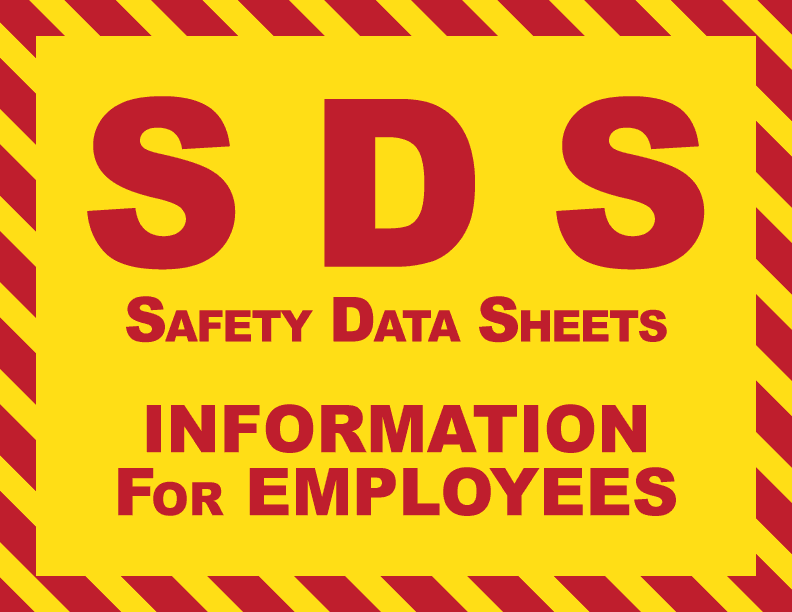
Every compliant GHS Safety Data Sheet must present information in a strict, unalterable 16-section sequence. The sections are logically grouped into operational, technical, and regulatory categories:
Group 1: General Information & Emergency Response (Sections 1–8)
- Section 1: Identification: Identifies the chemical name, product code, recommended uses, and manufacturer/distributor contact details, including a 24/7 emergency number.
- Section 2: Hazard(s) Identification: Details the GHS classification, pictograms, signal word, hazard statements, and precautionary statements.
- Section 3: Composition / Information on Ingredients: Lists chemical ingredients, common names, synonyms, CAS numbers, and concentrations.
- Section 4: First-Aid Measures: Outlines initial emergency care steps by exposure route (inhalation, skin, eye, ingestion).
- Section 5: Fire-Fighting Measures: Recommends extinguishing media and details specific hazards arising from chemical combustion.
- Section 6: Accidental Release Measures: Dictates emergency procedures, protective equipment, and containment/clean-up methods for spills.
- Section 7: Handling and Storage: Outlines safe handling precautions, hygiene practices, and specific storage requirements.
- Section 8: Exposure Controls / Personal Protection: Specifies Occupational Exposure Limits (OSHA PELs, ACGIH TLVs) and required PPE.
Group 2: Scientific, Physical, and Toxicological Properties (Sections 9–11)
- Section 9: Physical and Chemical Properties: Details critical data including pH, boiling/freezing points, flash point, and solubility.
- Section 10: Stability and Reactivity: Describes stability, potential hazardous reactions, conditions to avoid, and incompatible materials.
- Section 11: Toxicological Information: Provides toxicological data, exposure pathways, and acute/chronic health effects.
Group 3: Ecological, Disposal, and Transportation Data (Sections 12–15)
- Section 12: Ecological Information: Details ecotoxicity and environmental persistence (mandatory for international export).
- Section 13: Disposal Considerations: Provides proper waste classification and safe disposal methods.
- Section 14: Transport Information (Critical for Logistics): Lists the UN Number, Proper Shipping Name, Hazard Class, and Packing Group.
- Section 15: Regulatory Information: Identifies national and international chemical inventory listings (TSCA, REACH, etc.).
Group 4: Administrative and Revision Data (Section 16)
- Section 16: Other Information: Contains creation/revision dates, version numbering, and explanation of abbreviations.
Why MSDS/SDS Is Vital in International Freight and Multimodal Shipping
In global commerce, freight forwarders, commercial airlines, ocean carriers, and customs agencies enforce strict verification protocols on all chemical-related shipments.
1. Accurate Dangerous Goods (DG) Classification
An MSDS/SDS provides the decisive technical evidence to classify cargo as either Dangerous Goods (DG) or General Cargo. If classified as DG, Section 14 dictates the exact UN Number and Packing Group required.
2. Airline and Maritime Carrier Booking Acceptance
Under IATA and IMDG regulations, airlines and shipping lines will reject bookings for chemical cargo or lithium batteries unless accompanied by a verified, up-to-date SDS dated within valid regulatory timeframes.
3. Customs Clearance and Port Authority Clearance
Customs officers cross-reference the HS Code with chemical composition in Section 3. Any discrepancy can trigger customs holds, lab testing, costly demurrage, or shipment seizure.
4. Safe Segregation and Warehouse Storage
Logistics operators rely on Section 7 and Section 10 to execute safe segregation, ensuring incompatible chemicals (like oxidizers and flammables) are never stowed together.
Global Regulatory Standards: How MSDS/SDS Is Governed Worldwide
United States: OSHA Hazard Communication Standard
OSHA governs chemical safety under 29 CFR 1910.1200. OSHA aligned with GHS in 2012 and updated in 2024 to harmonize with newer GHS revisions, refining classification for aerosols and explosives.
European Union: REACH and CLP Regulations
The EU enforces safety via REACH (Registration, Evaluation, Authorisation, and Restriction of Chemicals) and CLP (Classification, Labelling, and Packaging), mandating Unique Formula Identifiers (UFI codes).
Canada: WHMIS 2015
Canada operates under the Workplace Hazardous Materials Information System, requiring SDSs in both English and Canadian French.
Asia-Pacific and Southeast Asia (Vietnam, China, Japan)
- Vietnam: Governed by the Law on Chemicals (05/2007/QH12) and Circular 32/2017/TT-BCT, mandating 16-section Chemical Safety Data Sheets in Vietnamese.
- China: Enforces GB/T 16483-2008, requiring SDSs authored in simplified Chinese for domestic transport and customs.
How to Find, Read, and Validate an MSDS/SDS
Where to Obtain an MSDS/SDS
- Manufacturer or Importer: They are legally obligated to provide a current SDS.
- Official Portals: Major producers host searchable SDS libraries indexed by product name or CAS number.
- Institutional Databases: Reputable sources include PubChem (NIH) and the ECHA database.
Checklist: Identifying Outdated or Invalid SDS Documents
- The document contains all 16 numbered headings in GHS sequence.
- The document includes a valid issue/revision date (usually within the last 3 years for carriers).
- The emergency contact number in Section 1 is operational.
- Product and manufacturer names match the commercial invoice and physical labels exactly.
Frequently Asked Questions (FAQ) About MSDS & SDS
Who is responsible for creating and providing the MSDS/SDS?
The chemical manufacturer, importer, or primary distributor is legally responsible for authoring and supplying the SDS. Logistics providers and end-users must maintain and follow the document’s instructions.
Do Material Safety Data Sheets expire?
While OSHA doesn’t set a calendar expiration, documents must be updated within three months of significant new hazard information. For international shipping, most carriers reject SDS documents issued or re-certified more than 3 to 5 years ago.
Do non-hazardous products need an MSDS/SDS for shipping?
While not legally required for sale, carriers frequently demand a Non-Dangerous Goods SDS to prove that liquids, powders, or cosmetics do not pose transport risks.
What is the difference between an SDS and a Certificate of Analysis (COA)?
An SDS focuses on safety, hazards, and handling. A COA is a batch-specific document confirming that a manufactured lot meets quantitative chemical specifications like purity and density.
Can an MSDS be written in any language?
An SDS must be in the official language of the jurisdiction where it is marketed. For international transport, English is universally required, while local compliance requires translation (e.g., Vietnamese in Vietnam).
Conclusion: Ensuring Seamless Logistics and Chemical Compliance
An accurate, compliant Material Safety Data Sheet (SDS) is an indispensable safety roadmap that protects human life and prevents supply chain delays. Whether you are an industrial manufacturer or an e-commerce merchant, mastering GHS SDS standards ensures total compliance across global borders.
Was this article helpful to you?
0.0 / 5 (0 lượt đánh giá)